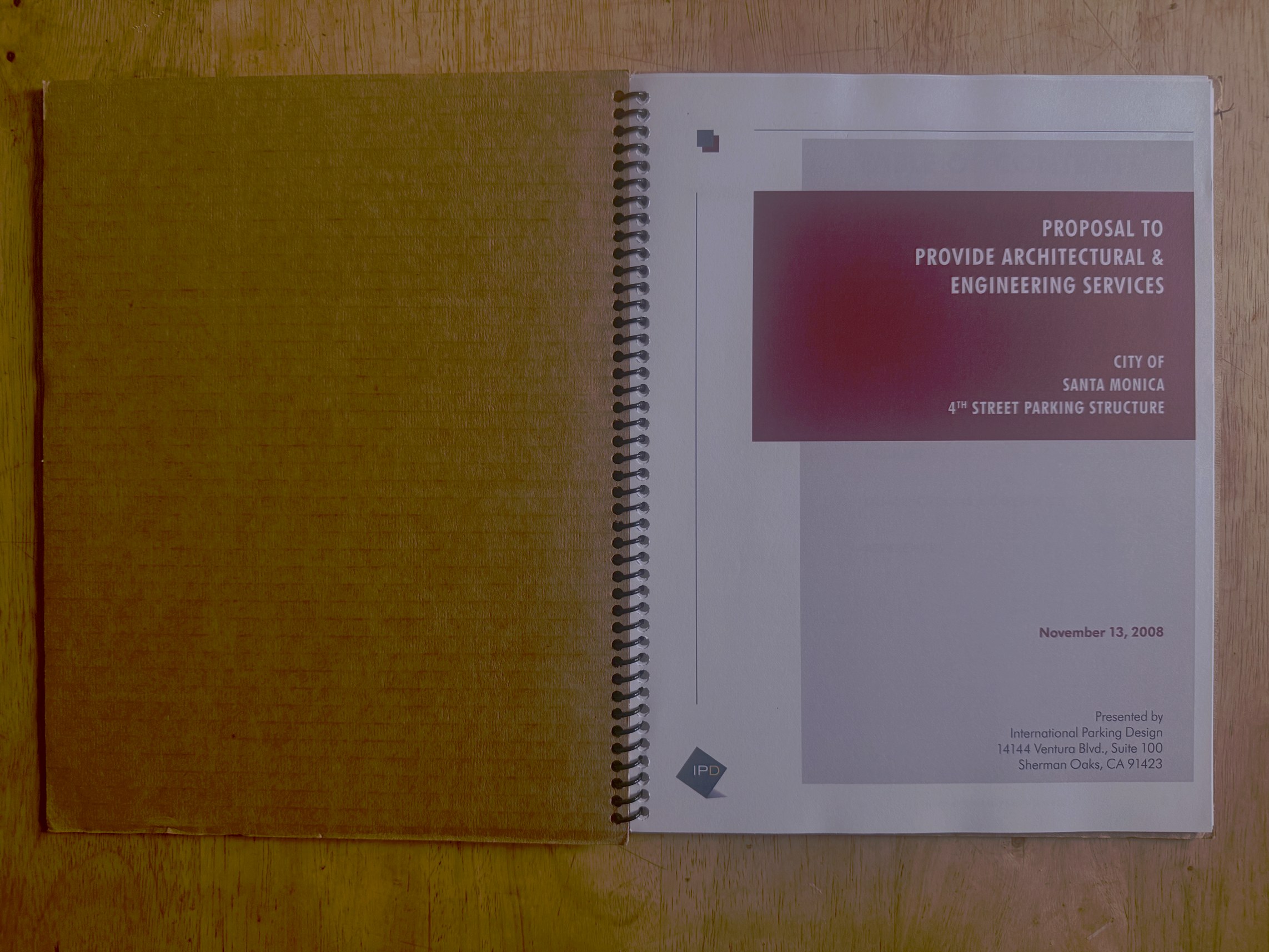
In 2008 I designed the proposal for International Parking Design's pursuit of the City of Santa Monica 4th Street Parking Structure — a project that would become the first LEED-certified parking garage in the United States. The submission was printed on 30% post-consumer waste recycled paper. The cover was made from found cardboard and actual IPD blueprints from prior projects — turning the submission's own materials into a physical argument for the project's environmental values. IPD won.
The City of Santa Monica RFP asked firms to propose architectural and engineering services for a new parking structure that would pursue LEED certification — a then-emerging standard that few parking structures had attempted, and none had achieved at this scale in the United States. The proposal had to demonstrate not just technical competence but a genuine commitment to sustainable design practice. The document itself needed to embody that commitment, not just describe it.
"Design a proposal that proves IPD understands sustainable design from the inside out — not as a checklist, but as a practice. The document itself should make that argument before anyone reads a word."
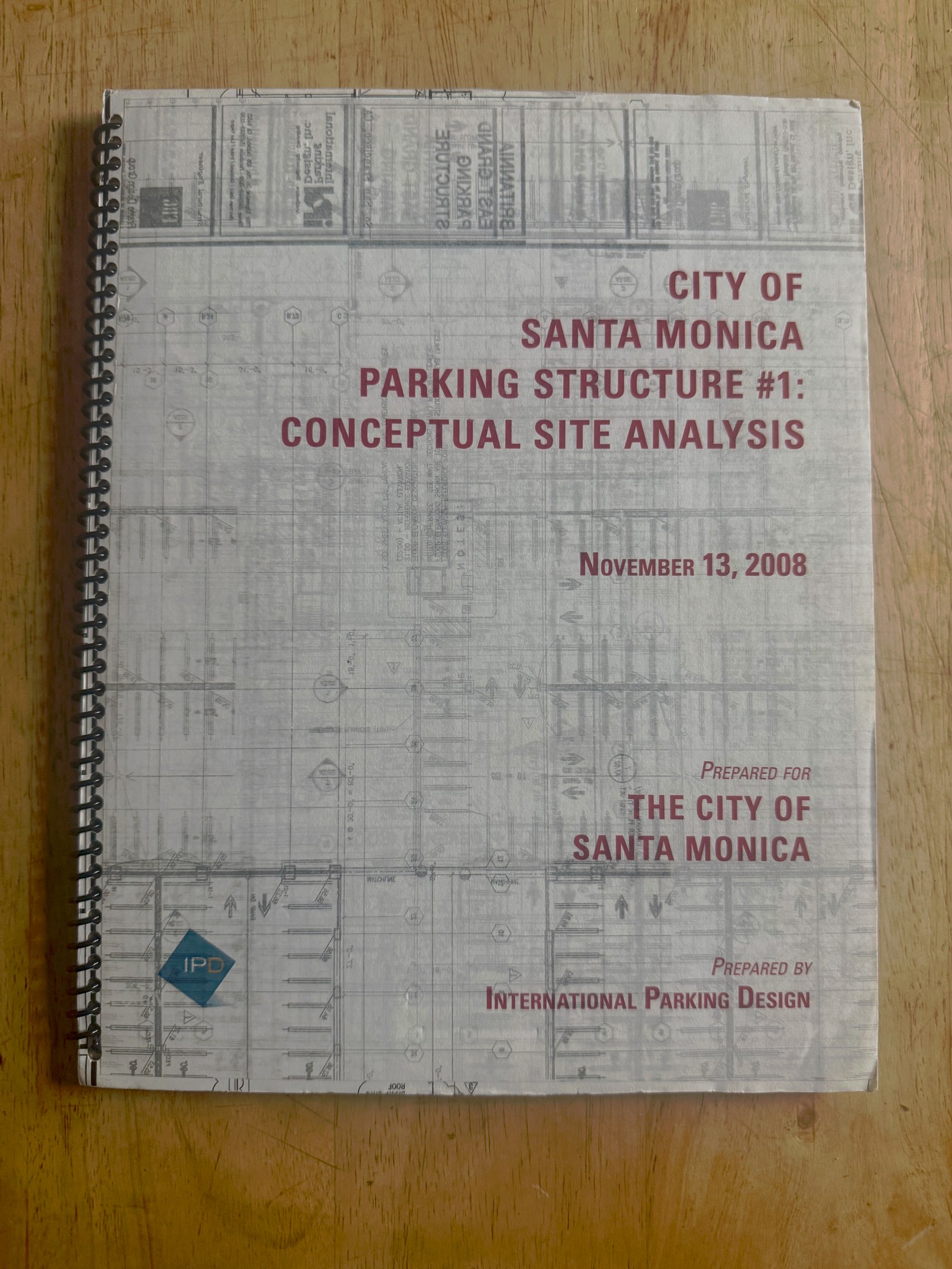
The cover is the first thing an evaluator touches. For a proposal arguing that a parking structure can be designed with genuine environmental consciousness, the cover material was itself a design decision. The answer was already in the building: found cardboard and actual IPD blueprints from prior projects. No new materials were purchased for the cover. The interior was printed on 30% post-consumer waste recycled paper.
The blueprints used on the cover and as a ghosted background element throughout are IPD's own working drawings — structural parking plans that would normally be discarded after a project closes. Here they became the texture of the proposal itself, embedding IPD's technical identity directly into the document's surface.
Cover: Recovered cardboard from office building recycling bin · discarded IPD project blueprints
Interior: 30% post-consumer waste recycled paper throughout
Binding: Spiral-bound, reusable
New materials purchased for cover: None
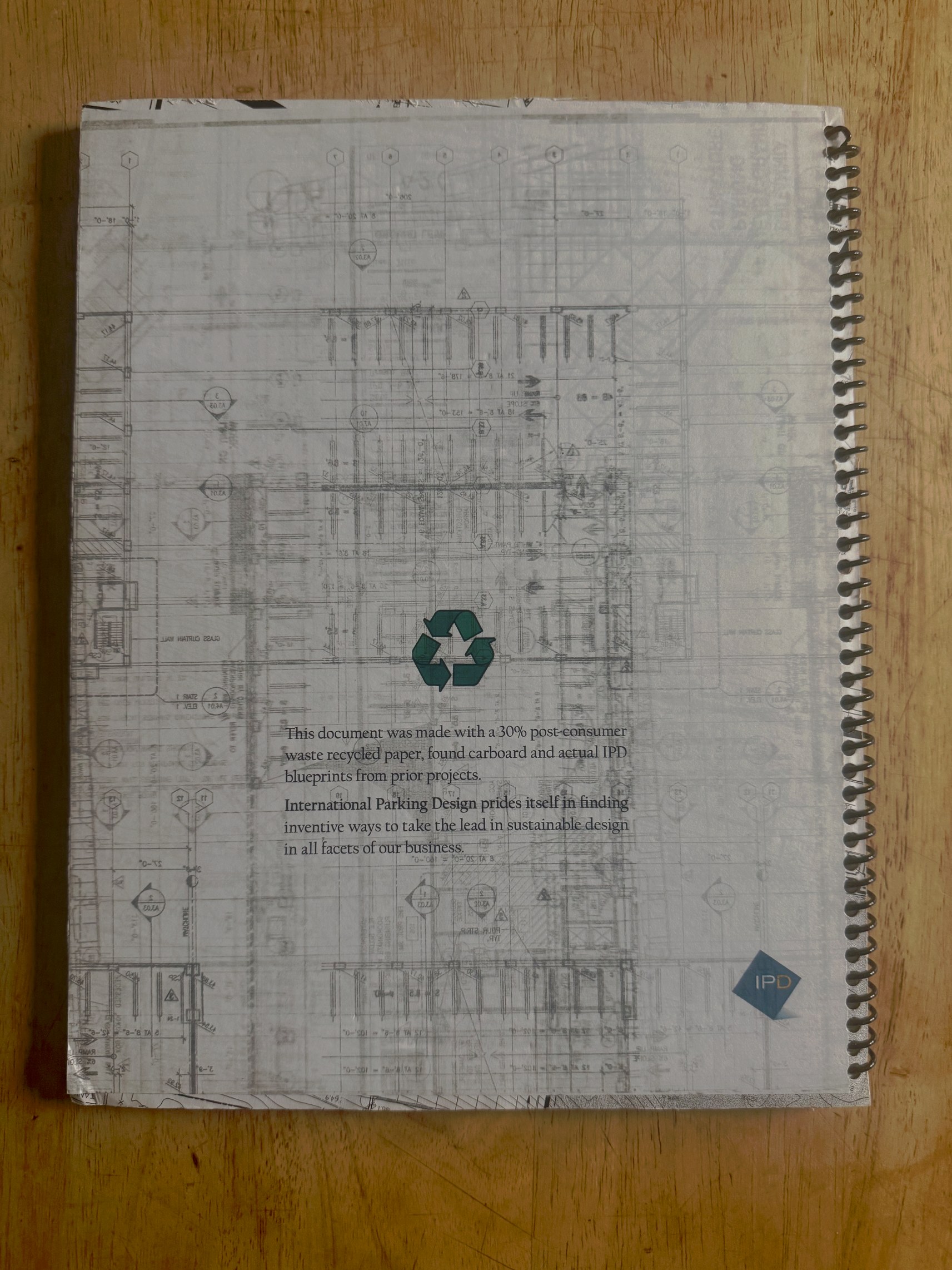
The back cover closes the argument the front cover opens. The full surface is the blueprint — IPD's own prior project drawings printed across the entire page — with a recycling symbol centered and the IPD diamond at bottom right. The colophon is printed directly on the blueprint field:
"This document was made with a 30% post-consumer waste recycled paper, found cardboard and actual IPD blueprints from prior projects. International Parking Design prides itself in finding inventive ways to take the lead in sustainable design in all facets of our business."
The proposal explains itself. The back cover is not a design element — it is a statement of practice. The recycling symbol is not a decoration. The blueprints are not a texture. Every material choice is named, sourced, and owned. This is what it looks like when a proposal's form is its argument.
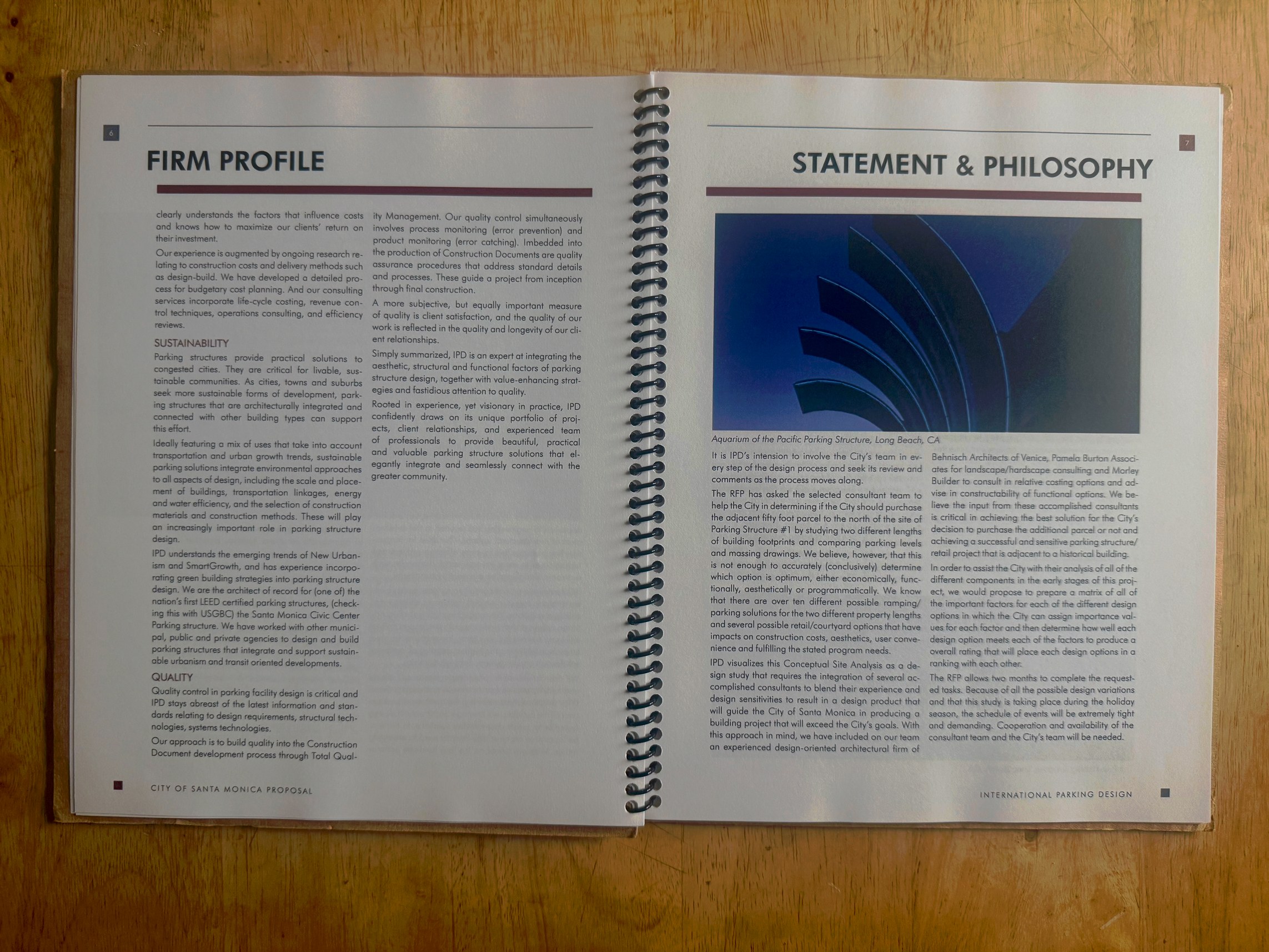
The front cover uses discarded IPD parking structure blueprints — ghosted structural drawings printed on recycled stock — as the visual field behind the title typography. The effect is layered and intentional: the firm's own technical work becomes the texture of its pitch. The crimson title block anchors the composition, the IPD diamond logo sits bottom left in its signature blue, and the overall register is restrained and confident — a document that doesn't need to shout about sustainability because its materials already say it.
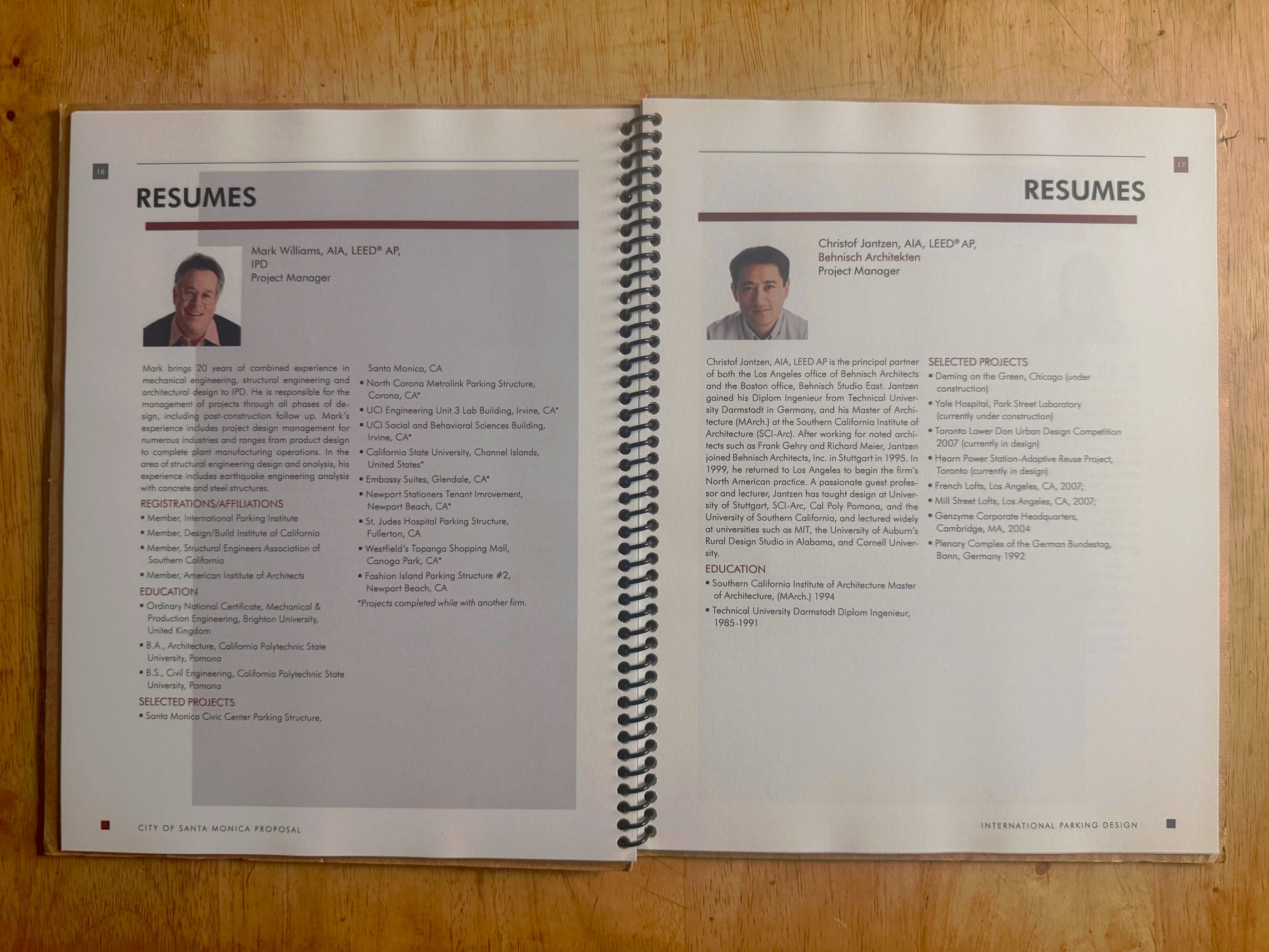
The proposal included full team resumes for both the IPD project manager and the lead architect from Behnisch Architekten — the collaborative firm brought in for their track record on institutional and sustainable design. Both team leads carried LEED® AP credentials, reinforcing that the environmental commitment in the cover materials extended through every person named in the submission. The layout is clean and consistent: headshot top left, biography paragraph, then structured credential sections in the proposal's established type system.
Contract awarded. First LEED-certified parking structure in the US.
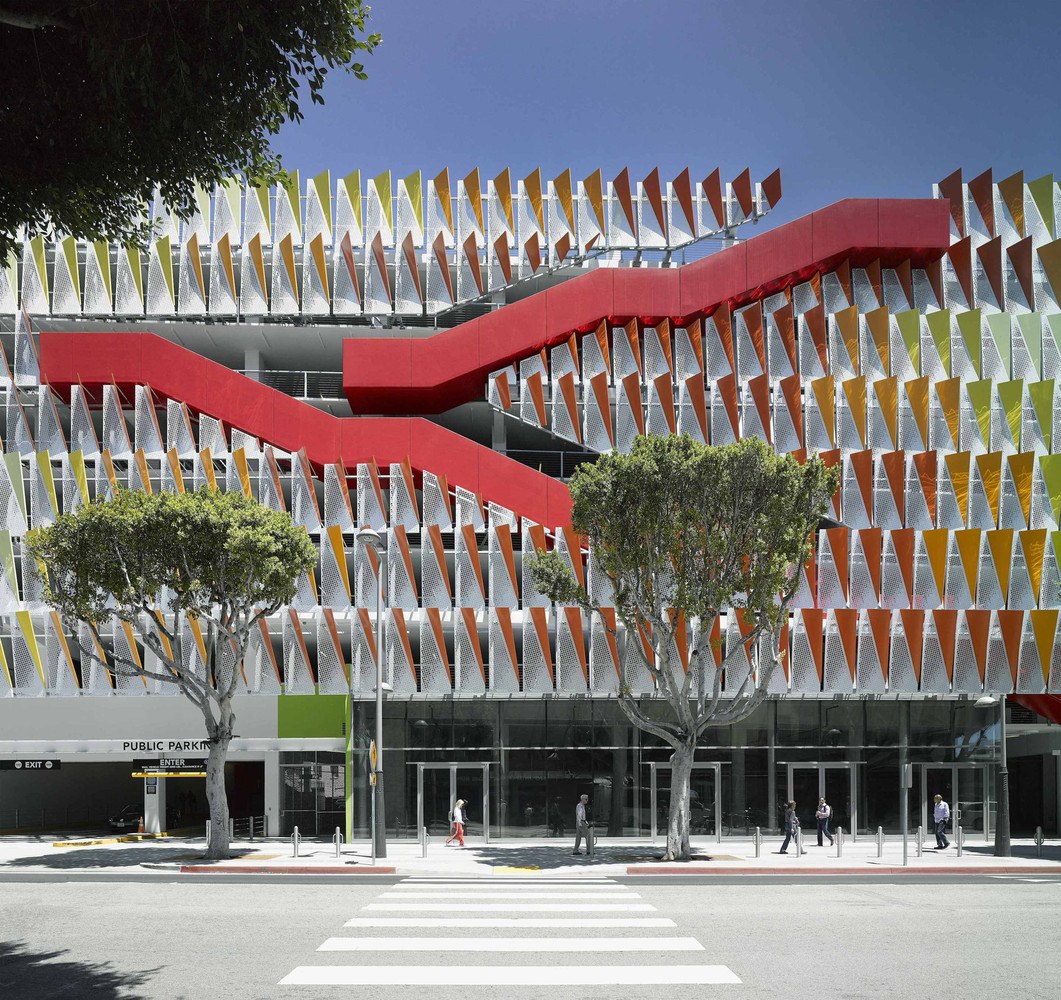
International Parking Design was awarded the contract for the City of Santa Monica 4th Street Parking Structure. The completed project became the first LEED-certified parking garage in the United States — a milestone in AEC sustainable design practice. The proposal's material choices were not incidental. They were part of the argument that won.
#1
First LEED parking structure in US — the project this proposal won
30%
Post-consumer waste recycled paper throughout the submission
0
New cover materials purchased — all recovered from the building
The proposal design problem here was not layout or typography — those were execution. The real design problem was: how does a document prove the firm's environmental values rather than just describe them? The answer was to make the document itself a demonstration. The cover isn't decorated with a sustainability message. It is the sustainability message, made physical.